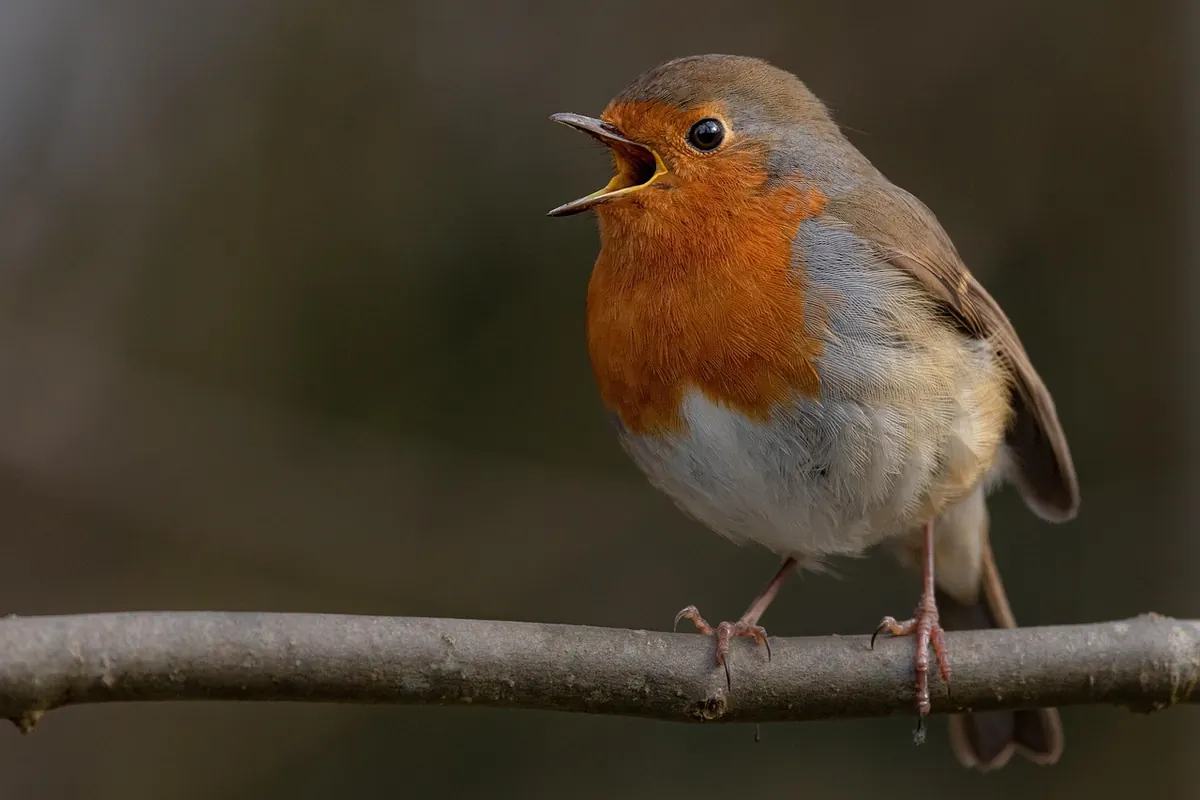
Most garden birds are heard before they are seen. A blackbird starts before sunrise, a robin answers from the fence, and somewhere in the hedge a great tit repeats the same two notes as if it has found a phrase it likes. For a beginner, that wall of sound can feel like a private language. You do not need to learn every species at once. A handful of common songs will carry you through most mornings at the feeder, and the rest can be added slowly, season by season.
Treat identification as a habit rather than a test. You are not trying to name every note; you are learning to recognise a few voices, the way you recognise a friend on the phone. The following steps will help you separate songs from calls, learn the easiest garden species first, and build a practice routine that fits into a cup of tea.
Begin with birds you can see
Before you worry about invisible singers, spend a few mornings watching the birds you already have. Put a chair a comfortable distance from the feeder and keep still. When a robin sings from the top of the hedge, watch its beak. When a blue tit calls from the branch above the peanuts, note the thin, high quality of the sound. Linking a visible bird to a sound is far more effective than trying to memorise a recording in isolation.
Notice posture and behaviour too. A robin often sings with its breast puffed out from an exposed perch. A dunnock tends to sing from deep cover, its song a rushed, dry little warble. A blackbird may sing from a chimney pot or television aerial, pausing between rich phrases. The bird’s habits are part of the identification.
Song or call? Know what you are hearing
Birds make two broad kinds of sound. Songs are usually longer, more structured and connected with territory and breeding. Calls are shorter and more functional: contact notes, alarm rattles, flight calls. Learning the difference stops you chasing the wrong answer.
A great tit’s spring song is a clear, ringing two-note phrase; its alarm is a scolding, nasal chatter. A robin sings for much of the year, including winter, but its tick-tick contact call is a quiet, sharp sound from the undergrowth. A blackbird’s song is leisurely and fluting; its alarm is a loud, metallic pink-pink-pink. When you hear something, ask first: is this a performance or a message?
The first five songs to learn
Choose a small set and stick with it until you can recognise each one without checking. These five are common in gardens across Britain and different enough to tell apart.
- Blackbird. Rich, mellow, unhurried phrases with clear pauses. It sounds as though the bird is thinking between sentences. Often the first singer of the day.
- Robin. High, wistful and trickling, with a slightly melancholy edge. It can sing at any time of year, including mild winter nights under streetlights.
- Great tit. A ringing, repeated two-note phrase, often written as tea-cher, tea-cher. The tone is bold and saw-like.
- Blue tit. A thin, high see-see-see or a rapid, tinkling series. It can sound almost too high for the hedge it is hiding in.
- Chaffinch. A bright, descending cascade that finishes with a flourish or a little kick. Think of a coin spinning down a chute.
Once these are familiar, add the song thrush, whose habit of repeating each phrase two or three times is one of the best identification clues in the garden.
Memory tricks that stick
Mnemonics are not childish; they are efficient. The brain remembers rhythm and shape better than abstract descriptions. Use whatever phrase works for you, even if it is silly.
Rhythm and shape
Great tit: tea-cher, tea-cher. Collared dove: a lazy three-note u-NITE-ed. Woodpigeon: a five-note coo often remembered as my toe bleeds, Betty, with the middle note stressed. Chiffchaff says its own name, a steady chiff-chaff-chiff-chaff from the treetops.
Pitch and texture
Blue tit and goldfinch sit high and thin. Greenfinch has a wheezy, drawn-out note like a small door creaking. Wren is astonishingly loud for its size, a rapid, explosive burst with a trill in the middle.
Song thrush repeats; blackbird improvises.
Mistle thrush often sings in wet, windy weather, hence its old country name, the storm cock.
A ten-minute practice routine
Consistency beats marathon listening sessions. Ten minutes in the same spot, several mornings a week, will teach you more than an occasional hour in a strange place.
- Stand still and listen for one minute without trying to name anything.
- Pick out one sound and follow it. Note whether it repeats, rises, falls or pauses.
- Find the singer with your eyes if you can, using binoculars if you have them.
- Write down three words that describe the sound, such as thin, rolling, wheezy.
- Check a birdsong recording later, but only after you have made your own notes.
Dawn is best in spring and early summer, but you can practise at any time. Avoid playing recordings in the breeding season, and never use playback to pull a bird into view. It causes stress and can disrupt nesting. Listening is enough.
Sorting out common confusions
- Blackbird, song thrush and mistle thrush. Blackbird is mellow and varied. Song thrush repeats phrases. Mistle thrush is wilder, more melancholy and often sings from a high exposed perch in poor weather.
- Great tit and blue tit. Great tit is lower, bolder and usually two notes. Blue tit is higher, faster and thinner.
- Robin and dunnock. Robin is clear and fluting. Dunnock is rushed, dry and delivered from cover.
- Woodpigeon and collared dove. Woodpigeon has a five-note coo with a distinctive rhythm. Collared dove has three lazy notes and a slightly nasal tone.
When two songs sound similar, listen for the ending. Many birds have a signature finish: a flourish, a trill, a repeated phrase or a sudden drop in pitch.
Your first month of listening
For the next four weeks, aim to learn one new song a week. Week one: blackbird. Week two: robin. Week three: great tit. Week four: blue tit or chaffinch. Keep a notebook by the back door, or use your phone to record a voice note describing what you heard. Write the date, the weather and the time.
Do not worry about the birds you cannot name. Every listener has gaps, and even experienced birdwatchers pause over a distant singer. The skill builds quietly. One morning you will hear a phrase from the hedge and know, without thinking, that it is a song thrush repeating itself. That is the moment the garden stops being background noise and becomes a conversation.
Photo: JonPauling / Pixabay