Stand on a headland on a bright October morning and you might watch hundreds of redwings and fieldfares come in low off the sea. Return in May and the same hedge will be busy with willow warblers and redstarts that flew through the night from Africa. Migration is the best reason to go birdwatching in Britain: the cast changes constantly, and the finest days are never quite predictable.
Why birds migrate at all
Migration is not really about temperature. It is about food. A swallow or a swift lives on flying insects, and once British skies stop producing them in autumn, staying put is not an option. Each autumn they head south; each spring they return to breed here, taking advantage of long daylight hours and the sudden explosion of insect life that makes Britain such a good place to raise chicks.
Other travellers come the other way. Redwings and fieldfares leave Scandinavia when the ground freezes and the berries run out, and our damp, mild winters look easy by comparison. Wigeon, teal and whooper swans do much the same. For them, Britain is the warm south.
Our islands also sit on a major route, the East Atlantic Flyway. Birds moving between Arctic breeding grounds and African wintering areas cross our coasts, and the shape of the country funnels many of them along the east and south coasts, and into estuaries such as the Wash, the Humber and the Severn.
The migrant cast list
It helps to sort what you see into rough groups. The labels overlap, but they make sense of a confusing day.
- Residents – robins, great tits and blackbirds are here all year, though in winter many are joined or replaced by birds from the Continent.
- Summer visitors – swift, swallow, house martin, cuckoo, whitethroat, garden warbler and spotted flycatcher arrive to breed and are gone by September.
- Winter visitors – redwing, fieldfare, brambling, brent geese, goldeneye and whooper swans spend the cold months here.
- Passage migrants – birds that refuel and move on, including curlew sandpiper, little stint, green sandpiper, dotterel and black tern.
- Irruptive and vagrant species – waxwings in a good berry year, crossbills, and the occasional rarity blown in from the east or across the Atlantic.
Some species blur the lines. Chiffchaffs and blackcaps increasingly winter here, and a few swallows linger into November.
The migration calendar
Spring: March to May
Sand martins and wheatears are usually the first arrivals in mid to late March, along with returning ospreys. Chiffchaffs start singing in the same weeks. April brings swallows, willow warblers and, towards the end, the first cuckoos. Early May delivers swifts, hobbies, garden warblers and spotted flycatchers. The best days follow a night of southerly winds and rain, especially on the east coast.
Autumn: July to November
Autumn starts quietly in July, when failed breeders and early waders head south. August and September bring warblers, waders on the estuaries and swallows gathering to roost in reedbeds. Late September and October are the main event: thrushes and finches pour in from Scandinavia, pink-footed geese arrive in noisy flocks, and redwings and fieldfares strip the hedgerow berries. By November the winter birds are settled, and hard frosts push golden plover, lapwing and snipe down to the coast.
Winter: December to February
Things are calmer, but not static. Cold snaps trigger movements of wildfowl and waders, and a good waxwing winter can fill suburban rowan trees overnight.
Reading the weather
Winds do much of the work for you. In spring, easterlies blowing off the Continent push migrants towards the east coast of England and Scotland; if those birds meet rain or sea fog, they drop into the first hedges they find. Birdwatchers call this a fall, and it can be spectacular. In autumn, north-westerly gales can drive seabirds and American vagrants towards the south-west and the Northern Isles. After a clear, calm night in spring, birds spread inland quickly. After a wet, windy one, they pile up on the coast.
How do they manage the journey?
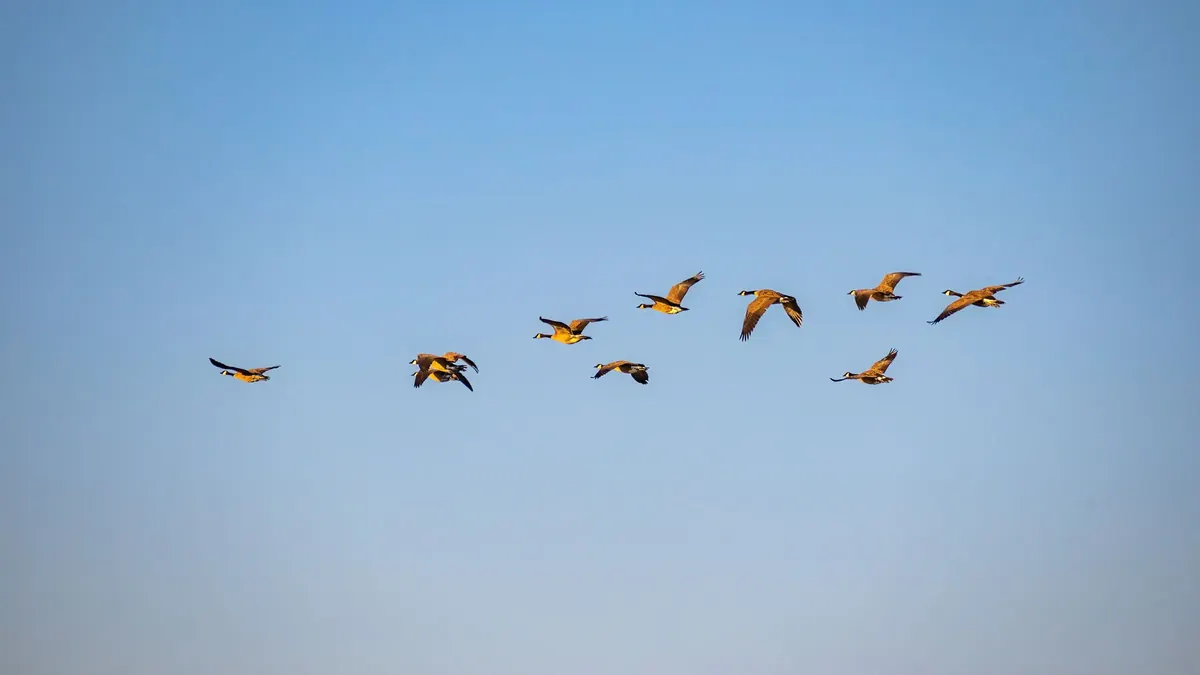
Small migrants such as warblers mostly fly at night, navigating by the stars, the sun, landmarks and the Earth's magnetic field, and stopping to feed by day. They can lay down enough fat in a few days to fuel a flight of several hundred kilometres. Geese, swifts, swallows and raptors travel by day, which is why these are the migrants most of us actually see.
Much of what we know comes from ringing, where trained volunteers fit lightweight rings under licence. If you find a ringed bird, reporting it genuinely helps.
Where to look
Migrants concentrate in particular places. Coastal headlands and valleys on the east coast are the classic choice in spring and autumn. Estuaries and wetlands hold waders and wildfowl through the winter. Islands and reservoirs act as stepping stones, and inland gravel pits can be surprisingly good. On a freezing morning, almost anywhere with open water and a hedge is worth a look.
Five practical steps for beginners
- Pick one patch and visit it weekly. A local park, reservoir or stretch of coast will teach you more than a string of one-off trips.
- Go early. Most migrants land at dawn and feed hard for an hour or two.
- Check the forecast the night before. Easterlies with rain in spring, or a northerly blast in autumn, are the days worth rearranging your plans for.
- Write down dates. Your own notes on the first swift or the last swallow will reveal the timing of your area better than any general guide.
- Learn a few calls. Redwings and fieldfares passing over at night, or a chiffchaff in a hedge, are often heard long before they are seen.
Keep your distance from roosts and resting flocks, particularly in cold weather, when every disturbance costs a bird energy it cannot easily replace. Beyond that, migration rewards patience rather than expertise. Learn a handful of species well, watch the wind, and the year will start to read like a story you can follow from your own doorstep.
Photo: Robert So / Pexels