The bird on the fence post is a warbler. You are almost sure. Twenty minutes later it is still a warbler, and you have talked yourself through three species and back again. Every birder has had that afternoon. Identification is a skill built from small habits — knowing what to look at, and in what order — and most beginner mistakes are less about knowledge than about method.
None of the ten traps below are stupid, and every one of them catches experienced birders on a bad day. The difference is that experienced birders notice themselves falling in. Read the list as a checklist to run through the next time something unfamiliar turns up in front of you.
Judging size without a reference point
Distance, light and posture will all lie to you about size. A Kestrel hovering on a warm afternoon can look small and dark as a Swift; the same bird perched on a gate looks sturdy and substantial. A Sparrowhawk on a lawn, seen from a kitchen window, can briefly read as something far bigger.
Field guides help less than you would hope. The lengths they list are measured from bill tip to tail tip on a prepared museum specimen, so they describe a bird lying flat on its back — not the rangy or fluffed-up thing in front of you. Judge size by comparison instead. Find something nearby that you already know: a Blackbird on the same lawn, a Woodpigeon on the same wire. "About two-thirds of a Woodpigeon" is a more useful note than "medium-sized".
Beware the fluff factor, too. A cold Blue Tit can inflate itself to nearly the bulk of a Chaffinch, and a sunning Woodpigeon looks immense. When in doubt, note the bird as "smaller than a Blackbird" or "clearly bigger than a Starling" and move on. Relative notes are honest; absolute ones are guesses.
Trusting colour before structure
Colour is the last thing to look at and the first thing beginners reach for. It shifts with low sun, backlighting, wet feathers and the flat grey of rain. A Greenfinch in drizzle can look almost colourless. The red face on a Goldfinch vanishes at twenty metres. Robins and Goldfinches in late summer wear fresh juvenile plumage with no red at all, which is why so many people report "odd" birds in July and August.
Work from the skeleton outwards:
- Bill — length, thickness, whether it curves up or down. This separates finches, tits, pipits and warblers at a glance, and it survives the worst light.
- Head pattern — eye-stripe, supercilium, crown stripe, whether the eye sits in a dark mask or a pale face. Confusion species usually differ here long before they differ in colour.
- Wings and tail — wingbars, primary projection, tail length, and whether the tail is square, notched or forked.
- Legs and bare parts — often the only reliable colour on a grey day, and the first thing to fade in your memory if you do not write it down.
Structure is also the only thing you can describe to another birder without ambiguity. "Pale pink legs, long tail, thin straight bill" is a set of facts. "Yellowish-brownish" is a mood.
Not listening to the call
Most warblers are heard twenty times for every one seen properly, and a great many identifications rest entirely on sound. Chiffchaff and Willow Warbler are near-identical to the eye but unmistakable by voice; so are Common and Mealy Redpoll, and so is the whole Crossbill complex. If you are ignoring calls, you are working with one hand tied behind your back.
Learn a handful of calls properly each year rather than fifty badly. The disyllabic "chiff-chaff" and the descending ripple of a Willow Warbler will carry you through most of spring. Once those are secure, add the "hoo-eet" of a Chiffchaff's autumn call, the thin high "seeep" of a Yellow-browed Warbler in October, and the flat "tack" of a Blackcap. Recordings on your phone, played quietly at home, cost nothing and repay the effort many times over.
Ignoring habitat and season
Where a bird is standing is evidence. A brown warbler deep in reeds is a Reed Warbler until proven otherwise; the same bird in a mature oak canopy is far more likely to be a Garden Warbler or a Chiffchaff. Wood Warblers want western oak woods with little ground cover. Snow Buntings want shingle and high ground, not your local park.
Season matters just as much. Juvenile birds flood the countryside from June to September, wearing plumages that no field guide illustrates well. Winter brings thrushes and wildfowl down from Scandinavia and turns a familiar estuary into a different place. Before you decide what a bird is, ask what it is doing there at that time of year. A "Yellow-browed Warbler" in June is almost certainly a Goldcrest.
Looking once and moving on
The single biggest difference between a beginner and an intermediate birder is time on the bird. Beginners look, decide, and walk away. Better birders look, look again, wait for the bird to turn, and only then start thinking about a name.
Give each unfamiliar bird at least two minutes, and try to see five features rather than one. A view of the breast says very little; a view of the breast plus the tail, bill, legs and feeding behaviour is a description. Many "mystery birds" solve themselves the moment the bird changes posture.
Forgetting behaviour and jizz
Birds move like themselves. A Grey Wagtail constantly pumps its long tail; a Pied Wagtail bobs and walks. Common Sandpipers dip their rear ends like clockwork toys, Green Sandpipers do not. Chiffchaffs flick their tails downward; Willow Warblers mostly do not. A Dunnock shuffles low and nervously; a Robin perches upright and bold.
Jizz — the overall impression of shape, movement and manner — is the hardest thing to learn from a book and the most useful thing you will ever develop. Watch common birds deliberately. If you know how a Song Thrush holds itself, a Mistle Thrush will look wrong in a way you can actually articulate.
Skipping the legs, tail and wings
"Small brown job" is not a description, it is a surrender. The legs tell you whether you are looking at a pipit or a lark. Tail length and shape separate Meadow Pipit from Tree Pipit, and Chiffchaff from Willow Warbler at a pinch. Wing length and primary projection do much of the work on rarer warblers.
Make a habit of running down the body in the same order every time: bill, head, mantle, wings, tail, legs. It takes seconds, and it means you never come home with half a description.
Assuming it must be rare
New birders do this in both directions, and both are costly. The first trap is the rare-bird reflex: every pale gull becomes an Iceland Gull, every large brown warbler becomes a scarcity. The second is the opposite error — dismissing a genuinely scarce bird because it seems too much to hope for.
The cure is the same for both. Compare your bird to the commonest species that could explain it, and test that explanation hard: does the bill match, do the legs match, is the call right? If the common answer fails on two or three features, then start looking further up the list. Start common, finish rare.
Not taking notes or sketching
Memory degrades alarmingly within an hour, and it rearranges itself to fit whatever you saw last. A few scribbled lines on a phone note or in a notebook changes the whole exercise. You are not writing for posterity; you are writing to force yourself to look properly.
Even a rough sketch helps. Draw the blob, then add the bill, the tail and the leg colour. If you cannot sketch it, you have not seen it well enough — and you now know exactly what to look for if the bird returns.
Never checking your own records
The final mistake is the quietest. Most birders keep a list and never look at it again. Go back through your records at the end of each season, especially the ones you were unsure of. The Dunnock you logged in July as a "probable Cirl Bunting" is a lesson worth keeping.
Compare your notes with call recordings, with photographs, and with birders who know more than you. Being wrong in private is how you stop being wrong in public.
A short field routine that prevents most of these
Run this in your head every time something unfamiliar appears:
- Get on the bird and hold it — two minutes minimum.
- Note the size and shape compared with something adjacent.
- Work down the body: bill, head, wings, tail, legs.
- Listen. Write the call down in syllables if you can.
- Note habitat, season and behaviour.
- Only now reach for a name — commonest first.
- Write it down before you look away.
It sounds laborious. In practice it takes less time than the twenty minutes you currently spend talking yourself out of one warbler and into another, and it builds a habit that never stops paying.
Every misidentification you write down honestly is worth ten you quietly forget.
What to carry
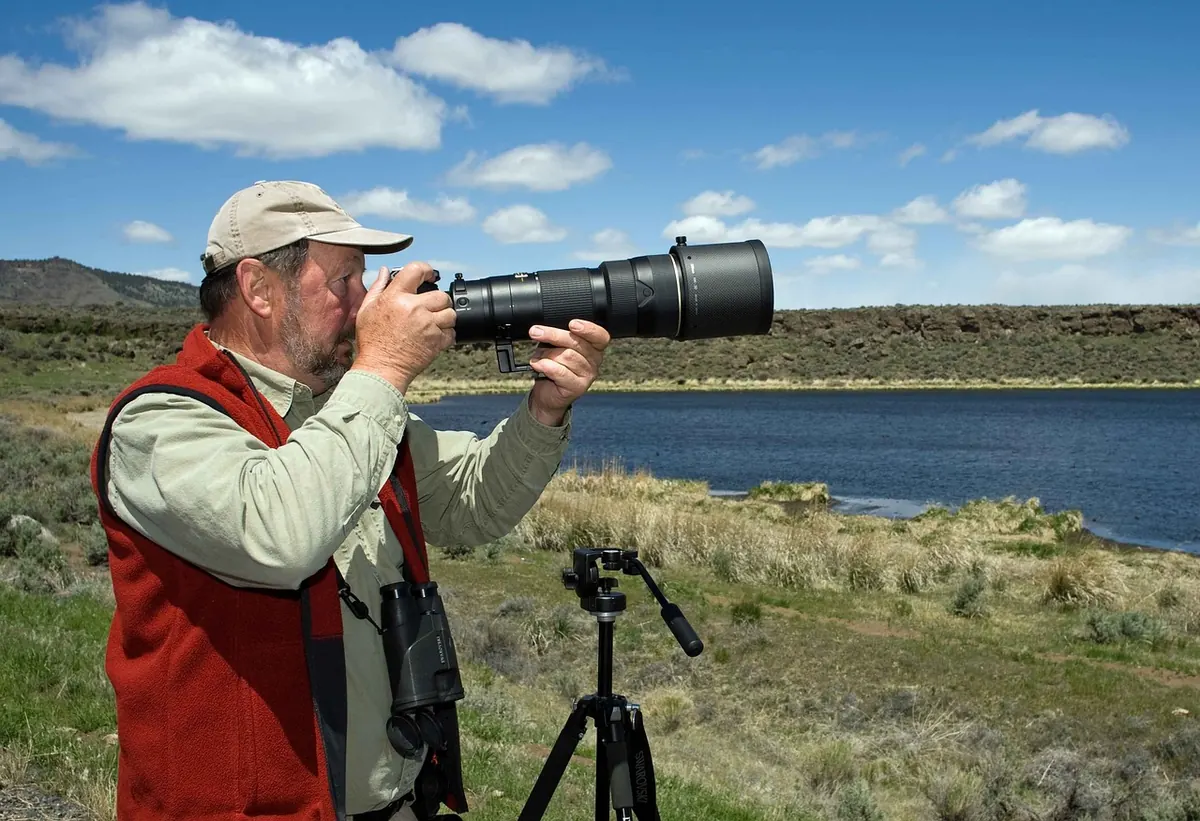
You do not need much. A notebook and pencil survive rain and battery death; a phone with a recorder app and one good field guide will do for everything else. Binoculars you can hold steady matter more than magnification you cannot. And if you keep one habit above all the others, make it this: look at the common birds properly, so that the uncommon ones have something to stand out against.
Photo: PublicDomainImages / Pixabay